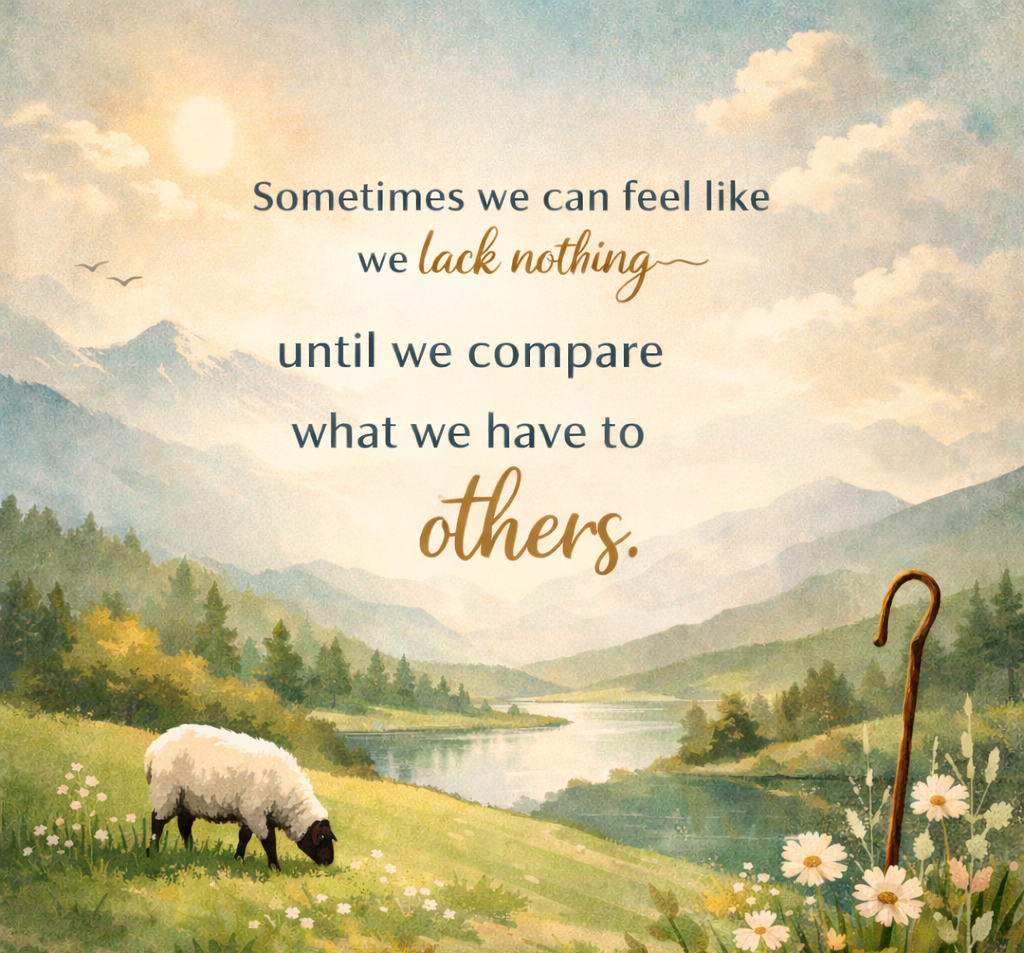
Gratitude: Returning to the Place Where We “Lack Nothing”
Recently, my children have been memorizing Psalm 23 at school. The very first verse in the NIV translation says:
“The LORD is my shepherd, I lack nothing.”
That single sentence carries both spiritual depth and emotional wisdom. It reminds us of provision, safety, and care—but also invites us to consider something many of us struggle with daily: contentment.
At chapel this week, the children talked about how God provides everything we need. What stood out to me was the conversation around how easily contentment can be disrupted. We may feel satisfied, grateful, and at peace—until someone else appears to have something better.
A better home.
A better car.
A better job.
A better life.
Suddenly, what once felt like “enough” no longer does.

How Comparison Impacts Emotional Well-Being
From a mental health perspective, comparison is more than an annoyance—it’s a powerful disruptor of emotional wellness. I once heard a sermon that used the example of buying a new home. At first, there’s excitement and gratitude. We feel proud, thankful, even joyful.
But over time, our focus often shifts.
We begin noticing flaws. We compare our home to others. Gratitude slowly gives way to complaint, and contentment quietly fades. Nothing about the house necessarily changed—but our attention did.
This shift is important. When we stop practicing gratitude, our nervous system often stays in a state of dissatisfaction. Over time, this can contribute to chronic stress, low mood, and emotional fatigue.
A Simple Experiment With a Big Lesson
There’s a well-known experiment involving monkeys, cucumbers, and grapes. While the study was designed to explore perceived inequality, it also reveals something profound about comparison and gratitude.
One monkey is given a cucumber as a reward and is perfectly content. He accepts it without hesitation. But when a second monkey receives a grape—a more desirable reward—for the same behavior, the first monkey becomes upset. He throws the cucumber away.
Nothing about the cucumber changed.
What changed was comparison.
How often do we experience something similar? We may have everything we need—until we focus on what someone else has.
(You can view a short clip of this experiment here: https://youtu.be/fZ7LwYPiA1I)
Gratitude as a Protective Practice
A well-known quote says, “Comparison is the thief of joy.” From both a clinical and spiritual standpoint, this rings true.
When comparison increases, gratitude often decreases.
When gratitude decreases, complaints and negativity grow.
Over time, this emotional pattern can contribute to discouragement, anxiety, and even depression.
Gratitude does not deny pain or difficulty. It does not require us to ignore loss, grief, or unmet desires. Instead, gratitude gently grounds us—helping us recognize what is steady, supportive, and present even in imperfect circumstances.
Returning to the Original Place of Peace
Perhaps the invitation today is to return to the original joy—the place where you once felt content. To remember moments when you noticed provision, safety, or care. To intentionally practice gratitude not as a forced mindset, but as a daily grounding practice.
When we focus on gratitude, we create less space for constant comparison. Less room for resentment. Less emotional weight carried by negativity.
Gratitude makes room for peace.
Gratitude supports emotional resilience.
Gratitude reminds us that hope is often closer than we realize.

If you find yourself struggling with comparison or feeling disconnected from contentment, you are not failing—you are human. And there is always an invitation to begin again.
One book that beautifully supports this idea is One Thousand Gifts by Ann Voskamp. It explores how intentional gratitude—even in imperfect, painful seasons—can reconnect us to joy, presence, and hope. It’s a gentle reminder that noticing goodness does not erase hardship, but it can soften its hold on us.
At Hope Again Counseling, we believe that emotional wellness is built through small, meaningful practices repeated over time. Gratitude is one of those practices—quiet, powerful, and deeply healing.
If today feels heavy, may gratitude become a gentle light.
If comparison has stolen your peace, may contentment be restored.
And if you feel weary, may you be reminded that hope is still available—and growing—one mindful moment at a time.

I appreciate how you wove together the spiritual and emotional pieces here. It felt both gentle and clarifying. Thanks again for taking the time to send this. It gave me something meaningful to sit with.